
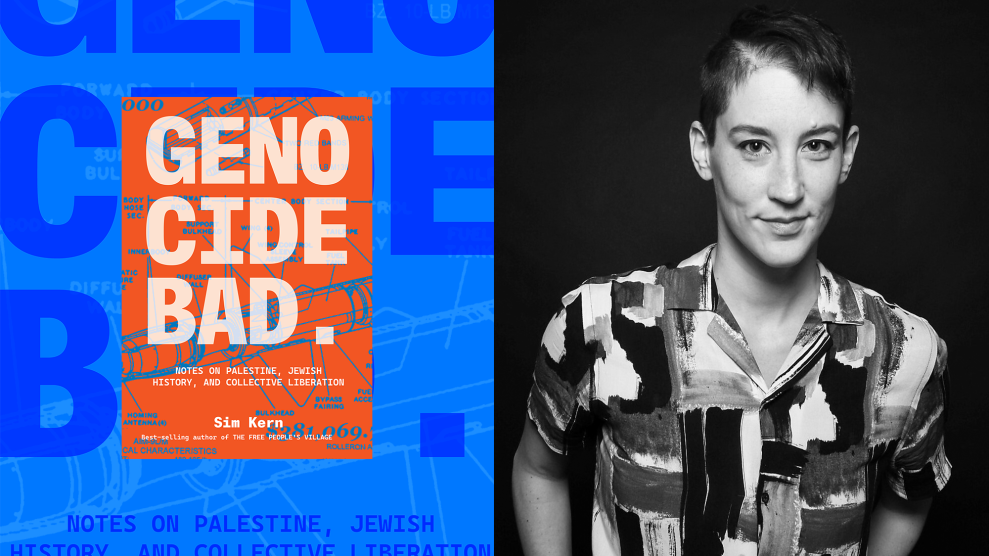
In their groundbreaking book, Genocide Bad, author and activist Sim Kern provides a crucial service for anyone trying to navigate the confusing and often deceptive landscape of Israeli propaganda, also known as Hasbara. After being inundated with thousands of Zionist talking points online, Kern began to see a pattern. "They actually only have a few rhetorical moves," they explain. By identifying these recurring tactics, we can learn to spot them, dismantle them, and stay focused on the fight for Palestinian liberation. Here are the nine pillars of Hasbara, as outlined in Kern’s book.
This is a gatekeeping tactic designed to shut down conversation before it even begins. It relies on "deference politics," the idea that we must defer to certain marginalized groups on specific topics. But as Kern points out, this can be easily manipulated. "No matter where you are, no matter how Jewish you are... someone’s going to gaslight you into saying you are not enough, you are not qualified to speak about Israel." The only way to win this game is not to play.
This pillar involves using the language of social justice to deflect criticism. Israel will often tout its supposed diversity—pointing to gay soldiers, Black soldiers, or female bomber pilots—to position itself as a progressive nation. This tactic, often called "pinkwashing" or "diversity washing," uses the identities of marginalized people as a shield to hide human rights abuses.
A variation of the human shield, this argument claims that Israel cannot be an apartheid state because it is racially and ethnically diverse. Kern dismantles this by explaining the difference between colorism and racism, and showing how the white Ashkenazi minority holds a disproportionate amount of power in Israeli society.
This is the cynical weaponization of Jewish collective trauma. Kern argues that Holocaust memory-keeping has become a Zionist exercise, used to justify violence against Palestinians. They point to the fact that Holocaust museums across the globe have refused to name the events in Gaza as a genocide, and have even disinvited Holocaust survivors who have spoken out in solidarity with Palestinians .
Much of the official Israeli narrative about its founding is built on lies and distortions. Kern focuses on the Six-Day War of 1967, showing how the version of events they were taught growing up is completely disconnected from the historical reality.
This is perhaps the most common Hasbara tactic: diverting attention from Israel’s war crimes by bringing up Hamas. Kern’s advice is to stay focused. "They’re trying to divert your attention from Israel’s massive and plentiful war crimes towards like one incident that may or may not have happened. Don’t get in the weeds. Like stay focused, stay on target." They also argue for the legitimacy of armed resistance against colonial occupation.
This is another distraction tactic, where the conversation is shifted from the actual genocide happening now to a hypothetical future genocide against Israelis. Kern points out that this fear of "reverse genocide" is a common feature of anti-colonial struggles, but one that rarely, if ever, materializes in reality.
This pillar conflates anti-Zionism with anti-Semitism. Kern, who has a background in anti-Semitism education, argues that anti-Jewish hate in the US is a white supremacist Christian phenomenon, while Palestinian resistance is a struggle against settler-colonial occupation. They argue that, ultimately, Zionism is the biggest threat to Jewish people worldwide.
This final pillar rests on four false claims: that Jews are entitled to Palestine because of the Bible, international law, indigenous status, or birthright. Kern systematically debunks each of these claims, showing that none of them hold up to scrutiny. The chapter concludes by addressing the question of what to do with Israeli Jews who were born in Palestine, explaining that decolonization and land back do not mean the expulsion of all Jewish people.
By understanding these nine pillars, we can become more effective advocates for Palestine. We can learn to recognize these deceptive rhetorical moves, refuse to be drawn into bad-faith arguments, and keep the focus where it belongs: on the fight for collective liberation.
[1] The Guardian. (2023, October 24). Israel must stop weaponising the Holocaust.
https://www.theguardian.com/commentisfree/2023/oct/24/israel-gaza-palestinians-holocaust


.svg)


